The multi-part spatial installation “Ranchería” is the result of my travel experiences in La Guajira, Colombia.
In it, I reflect on the exploitation of resources in this region by using the game of chess as an allegory for colonial dependencies. The chessboard squares are filled with coal and sea salt, symbols of the main resources of the area.
*This project was funded by the Graduate Scholarship of the State of Saxony-Anhalt and the Burg Giebichenstein University of Art and Design Halle.

Ranchería: 2021- 2022 Installation | King of Chess:Tufting (wall tapestry), 80 cm x 80 cm, red wool approx. 200 cm long, palm roof (variable dimensions), bench 60 cm x 43 cm x 30 cm, wood | Chessboard: wood, sea salt and coal, 260 cm x 200 cm x 5 cm | Queen of Chess: Tufting (wall tapestry), 80 cm x 80 cm, red wool approx. 200 cm long, palm roof (variable dimensions), bench 60 cm x 43 cm x 30 cm, wood | Photo: Jorge Sánchez Di Bello

Chessboard: 2021- 2022 Installation | wood, sea salt and coal, 260 cm x 200 cm x 5 cm | Photo: Jorge Sánchez Di Bello
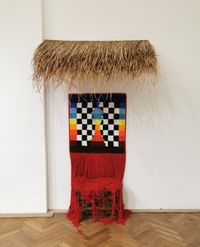
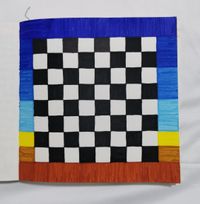
King of Chess: 2021- 2022 Installation | Tufting (wall tapestry), 80 cm x 80 cm, red wool approx. 200 cm long, palm roof (variable dimensions), bench 60 cm x 43 cm x 30 cm, wood | Photo: Jorge Sánchez Di Bello
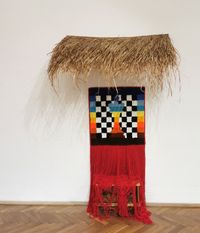
Queen of Chess: 2021- 2022 Installation | Tufting (wall tapestry), 80 cm x 80 cm, red wool approx. 200 cm long, palm roof (variable dimensions), bench 60 cm x 43 cm x 30 cm, wood | Photo: Jorge Sánchez Di Bello

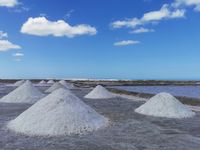
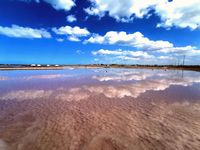






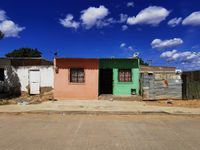
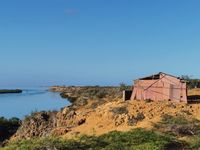
The research and design project Ranchería is the result of the travel experiences I had in the region of La Guajira, Colombia.
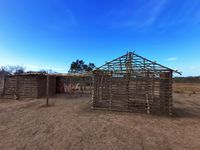
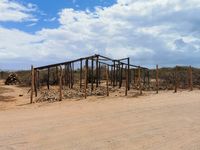
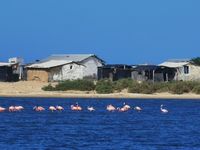
Ranchería is the term used for the house or groups of houses inhabited by the Wayuu. The Wayuu are one of the largest and most representative indigenous communities in Colombia. The history of the Wayuu is inseparably linked to the history of the territory. The La Guajira peninsula is and has always been a place of constant resource exploitation.
At my first confrontation with the place after more than 11 years, I paradoxically perceived the area as a chessboard after processing the collected documentation. I decided to use the game of chess to convey my experiences with this place and created an installation, an allegory of my experiences.
Chess is an ancient game. It is not a game of chance and is recognized as a strategy game. It is a black-and-white battle between two kings, two queens, four bishops, four knights, four rooks, and 16 pawns. The game is played on a square board with 64 squares divided into light and dark fields. Each player tries to gain a material or positional advantage over the opponent, although the ultimate goal is to attack the king in such a way that it cannot be defended, which is called checkmate. Victory can also be achieved if the opponent resigns or time runs out. Another possible outcome is a draw or a stalemate. Necessary elements of the game include a physical space to conduct the game and a double chronometer clock that measures the time each player has for their moves. Time controls in chess arise from the need to prevent players from thinking too long about their moves. Chess is not only an apology/justification for a combat situation; it is also the perfect representation of a “colonial game.”
The installation is based on the physical space of representation necessary for the development of the game. A board with 64 squares is transformed into a kind of sandbox with a depth of 5 cm and filled with black and white fields, using coal and sea salt as an analogy for the main resources most exploited in the region, either by the Wayuu or by external actors. It should be noted that the board in my game is not square, but takes the shape of the map of the Department of La Guajira. The squares measure 20 cm x 20 cm, and the usable surface is approximately 280 cm x 200 cm.
Part of my own experience and of decisive importance for the viewer are the handcrafted butacas, wooden seats or benches inspired by those of the Wayuu. These are located beneath long red threads that emerge from a wall tapestry. The tapestry was made using the tufting technique and is not only inspired by the typical materiality of Wayuu craftsmanship, but also reflects through its colors the images of the dry Caribbean desert landscape of the region. The two wall tapestries essentially represent the king and the queen, important chess pieces that also very well depict the hierarchy of the Wayuu, bearing in mind that the role of the queen in Wayuu life is almost as important as that of women in a traditionally practiced matriarchy. The dimensions of the tapestry are 80 cm x 80 cm. The red threads reproduce the traditional manta, a cloth of Wayuu women, whose materiality plays an important role in the transmission of ancestral knowledge in the making of mochilas (bags), chinchorros (hammocks), wall tapestries, handles, and woven accessories. When they fall onto the butacas, they invite the viewer to sit down and take part in observing the territory. The length of the threads is approximately 2 m over a width of 80 cm. This material composition is located under a thatched half-roof as part of the house, but can also stand as a representation of the many improvised shade-giving shelters in the desert of La Guajira. The dimensions of the half-roof are 140 x 40 x 60 (L x H x W in cm).
With regard to all the materials used, I would like to emphasize that they are part of an imaginary representation of my chess game, and that all these materials, in their form and composition, bear in some way a footprint of wind, sun, water, salt, and coal.
The viewer is invited to enter the spatial installation. In my chess game there are no special rules. The atmosphere reflected within invites us to think about a distant territory that is so foreign to an Arijuna, which in Wayuunaiki means “foreigner,” that it is difficult to travel through, and even more difficult to fully understand in its depth.
Starting from a territory where many social, political, ethnic, historical, economic, and cultural conflicts converge, a mediator is often required. The figure of the Pütchipü’üi, known in Wayuunaiki as “palabrero,” is traditionally significant in resolving problems between different actors through the use of words. With his traditional knowledge and worldview, he assumes a central role in the “chess game.” For those who choose to take a seat on the butaca, the act of sitting and observing represents this game piece—a game as complex as life on the Wayuu rancherías, as complex as the respective cosmology that each person adopts and, with the necessary courage, also questions.
Finally, I would like to point out that I have never played chess and have never learned how to play chess. This “not-knowing” is an essential part of the metaphor of staging my research journey to La Guajira as a spatial chess game, and perhaps also of better understanding it.
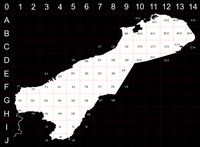
Landkarte-Skizzen: (Map sketches) Digital image, Department of La Guajira, Colombia, 2022.