Calados -Cocaína
The calados, made of concrete, are typical elements of the architecture of tropical countries; they function as open walls. They allow light and ventilation to pass through. Most windows together form a geometric pattern within a connected structure.
Calados–Cocaine is the union between architectural design (calados) and the chemical structure of cocaine (pattern) in the construction of a window. It unifies the materiality of the object (glass) with the chemical formula of the substance. Through the window, the viewer is confronted with knowledge about the drug, its origin, and Colombia.
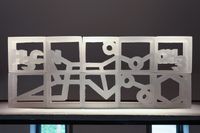
Calados - Cocaína: Fused glass | 50 cm x 126 cm x 10 cm | 2014 | Photo: Anne Martin

Calados - Cocaína: Fused glass | 50 cm x 126 cm x 10 cm | 2014 | Photo: Anne Martin.